
Investigación y ciencia
Papers
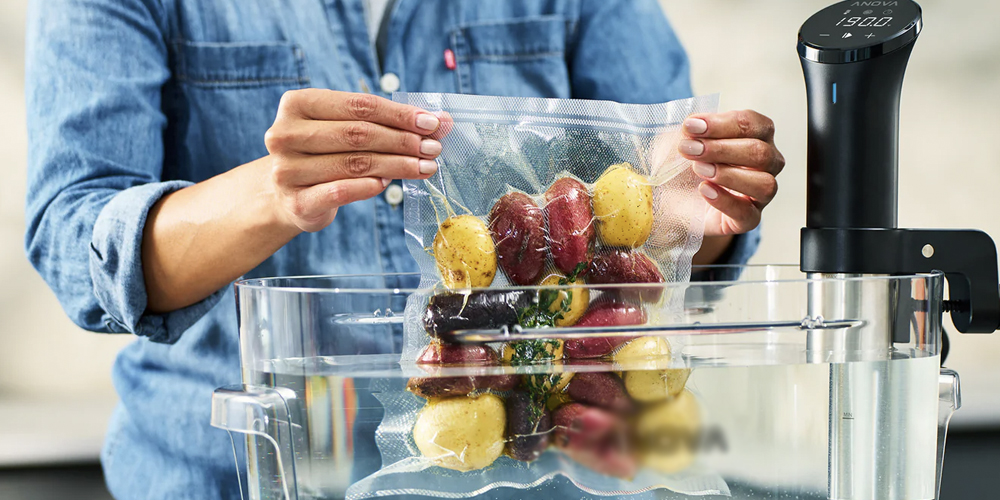
Sous Vide Cooking
The precise control of temperature and time determines the quality of culinary preparations Sous vide cooking differs from traditional culinary methods in two key aspects: first, raw food is placed in a heat-resistant bag in total or partial absence of air; next, it...

Ciencia y Gastronomía
Dialogue, tradition and innovation After 25 years of the congress held in Erice that laid the foundations for molecular gastronomy, this monograph offers an excellent journey through the history and development of this new discipline that emerged from the dialogue...

The pending revolution
A couple of years ago, in March 2019, chefs and scientists from all over the world gathered at the World Congress on Science and Cooking in Barcelona (photograph) and signed a manifesto. They aimed to consolidate and set the course for a new discipline that has taken...

The brines in today’s kitchen
Its use before cooking offers culinary, gastronomic and dietary advantages Common salt (sodium chloride) is one of the highest purity culinary products. There are different variants, depending on how they are obtained and used. We have rock salts or mineral salts such...

Sustainable restaurants
The next culinary revolution The restaurant of the future should necessarily be sustainable. This is the feeling that is perceived in the gastronomic panorama, and that has been increased by the outbreak of the COVID-19 pandemic. In 2016, the American National...

Bread
While some worship it, others avoid it Our relationship with bread has suffered some lurches in the last fifty years. His presence at the tables was unquestionable before. Various daily rituals gave it an almost religious value: before cutting a piece of bread, it was...

Impregnations
The vacuum technique revolutionizes macerations Marinating consists of leaving a food product submerged in a liquid so that both interact. Formerly it was used as a method of conservation. Acidic aqueous products, alcoholic distillates, oils or other fats were used....

The tomato sauce
From the home pantry to the supermarket A sofrito is a seasoning that is added to various preparations to give them flavor. It is produced with various vegetable products cut and fried in oil at a low temperature to avoid too intense roasting. It is used as a base in...

The edible plankton
Taste of the sea on the plate The term plankton, from the Greek plankton ("drifting"), was proposed in 1887 by the marine biologist at the University of Kiel Victor Hensen. Aware of the importance of these tiny wandering organisms, he secured funding to carry out an...

Ice creams
Next challenges: more flavors and fewer calories Dictionaries still describe ice cream as a sweet food, made from milk or fruit juice, consumed cold. However, this definition is now outdated. Currently we can find ice creams with all kinds of flavors, sweet or salty....
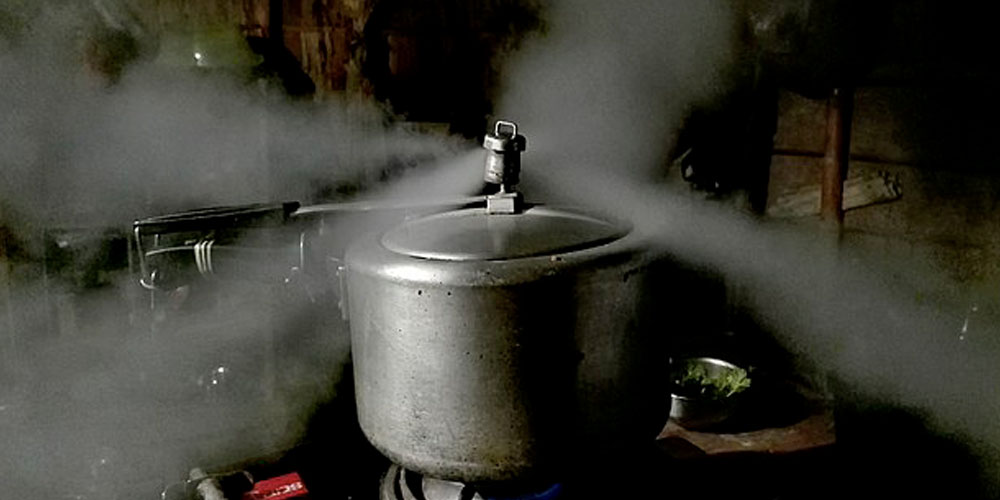
The pressure cooker
Little used in recent years, the veteran instrument has great potential Technology in the professional kitchen —and, by extension, in the domestic kitchen— was evident in the 20th century with the appearance of grinders, mixers, juicers, toasters, blenders and...

The gelling revolution
From the mad cow crisis to the social applications of molecular gastronomy It is common in various culinary traditions to use the gelled substance obtained by boiling animal remains or algae (the released proteins form three-dimensional networks). In Western kitchens...

The seaweed
Essential in the kitchen of the future The gradual introduction of algae in Western cuisine is one of the demands of those responsible for managing future food, since they are postulated as an alternative source of food for a growing world population. They can be...

Inulin
Its emergence in gastronomy is imminent Inulin has burst onto the food scene with force thanks to its good nutritional reports. Chemically, it encompasses a family of fructan-type polysaccharides. It is present in numerous vegetables such as onions, garlic and...

Umami
The fifth basic taste gains prominence in Western cuisine In 1908, Tokyo Imperial University professor Kikunae Ikeda identified monosodium glutamate as responsible for a flavor distinct from sweet, sour, salty, and bitter, the classic basic tastes. He found the...

The soy
Infinity of derived products for the kitchen The human species has been consuming soy for more than 5,000 years. Its high protein content and a considerable percentage of fibers and lipids make it a very nutritious food. But humanity has not only used soy in its...

The importance of foams in the kitchen
When the combination of a liquid and a gas becomes a solid To a physical chemist, a foam corresponds to a colloidal dispersion, or colloid, in which the dispersion medium is a liquid and the dispersed phase is a gas. Although it seems like a simple system, scientists...

Fibers
Nutrition and gastronomy go hand in hand If we take a walk through the diet section of any supermarket, we can read advertising phrases such as "Rich in fiber" on many of the packages. What substance are they referring to? In addition to "enriching" certain food...

Microwave cooking
The microwave oven is becoming a common culinary tool for new generations Since the discovery of fire, human beings have used heat to cook; and he has always done it the same way: providing external temperature. This thermal transmission can take place in various ways...

Fried
The high temperatures of the oil produce a crunchy texture and a characteristic taste. Frying is one of the oldest cooking techniques. Fried foods are enjoying increasing popularity; They are consumed by people of all ages. This is due to its distinctive flavor and...

The mead
This ancient and mythological alcoholic drink is obtained from the fermentation, at a controlled temperature, of a mixture of water and honey. History points to mead as the first fermented alcoholic beverage consumed by humans. In the Cueva de la Araña in Bicorp...

Sous vide
The fine control of temperature and time determine the quality of culinary preparations. Warm cod with spinach, idiazábal cream, pine nuts and Pedro Ximénez reduction. Emblematic example of cooking at low temperatures. [THE CELLER OF CAN ROCA] Sous vide cooking...

Starch
The proportion of amylose and amylopectin, one linear molecule and the other branched, determines the properties of each type of starch. Starch is a digestible complex carbohydrate (polysaccharide), from the group of glucans. It consists of glucose chains with a...

The “cava”
Low temperatures favor the permanence of carbon dioxide bubbles in the liquid. That is why we like to drink it very cold. Carbon dioxide bubbles turn cava into sparkling wine (left). When xanthan, a thickener, is added, it increases the viscosity of the liquid and the...

Jams and marmalades
Sugars, pectin and acids are the basic ingredients to prepare canned fruits, vegetables and flowers. For the English, a marmalade is a preparation of citrus fruits with sugar; a jam, the sweetened concoction of other fruits. In Spain, the semantic profiles of one and...

Kombucha
El té fermentado entra con fuerza en la gastronomía occidental. La fermentación es una de las técnicas más antiguas que se conocen para la conservación de alimentos. Sobre todo en los países asiáticos, es muy común aplicarla a pescados, carnes y verduras....

Between plant and sweetener
After overcoming a long legal hurdle race, stevia is increasingly used as a substitute for saccharin and aspartame Stevia (or stevia) is a plant of the Asteraceae family that, in the wild, is still found in some areas of South America, especially in Paraguay. It owes...

The sweet side of life
A walk through the world of sweeteners. With "asúcarrr" begins the famous song by Celia Cruz Laugh and cry. A complete declaration of intent that connects us with the warmth, flavor and joy that we usually associate with this product. Sugar is the common name given to...


